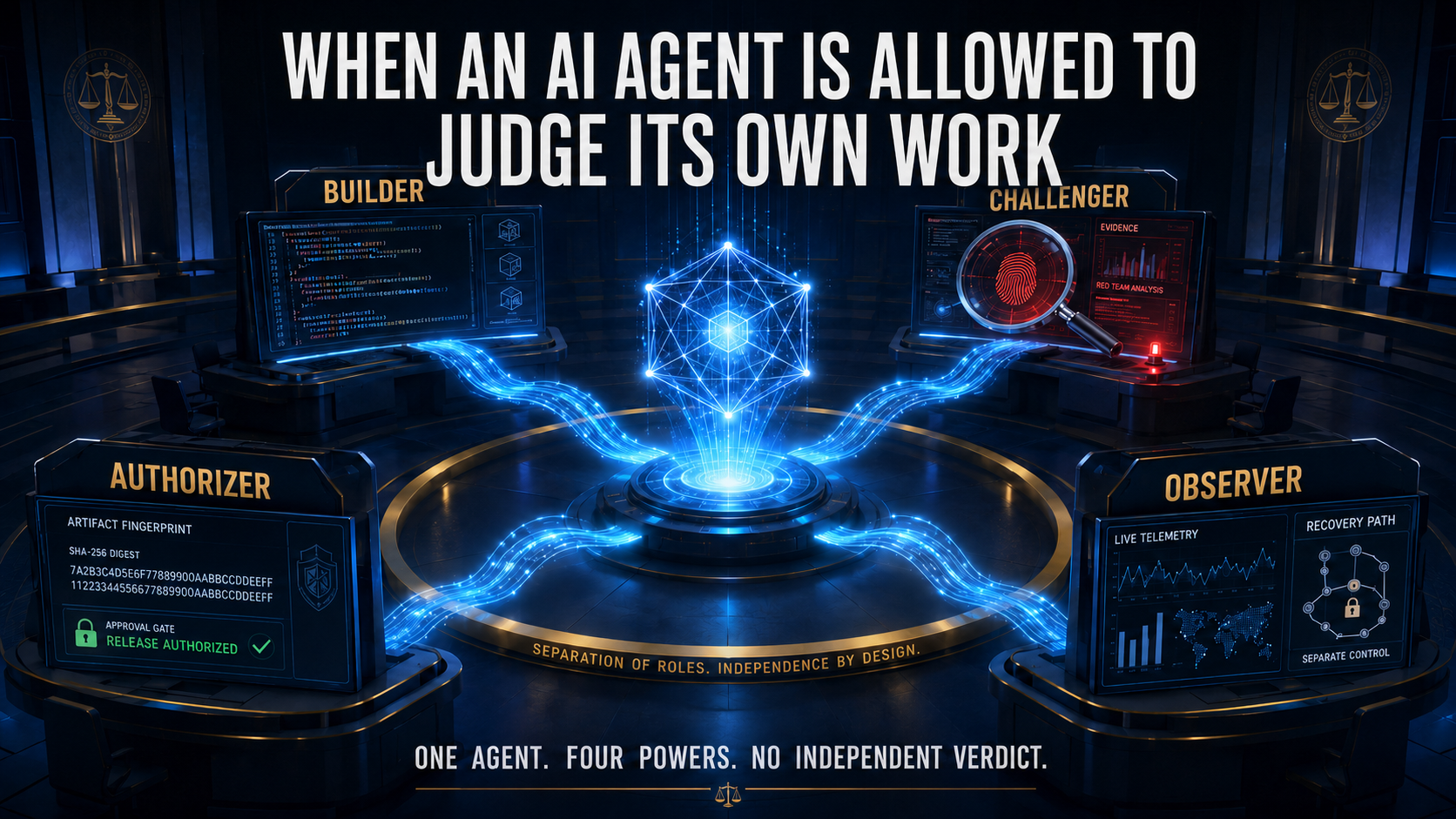
Four separated control stations labeled Builder, Challenger, Authorizer, and Observer surrounding a single glowing AI core
    AI Governance · Independent Review · Human Oversight

    When an AI Agent Is Allowed to Judge Its Own Work

    Self-critique can improve an artifact. It cannot substitute for independent evidence, separate approval authority, and a recovery path outside the system under review.

    Matthew A. Mishak, Esq.

    Founder & CEO, LegalTek.ai

    ~9 min read•August 3, 2026
    Share

    An AI agent can reproduce the failures of an entire dysfunctional organization without feeling pride, fear, or ambition. The cause is not machine psychology. It is how we arrange memory, goals, evidence, and authority.

    When Bad News Lost Its Weight

    On January 16, 2003, a piece of insulating foam broke away from the Space Shuttle Columbia roughly 81 seconds after liftoff and struck its left wing. The crew continued what appeared to be a successful 16-day mission. They did not know whether the wing could survive reentry.

    Engineers saw the strike in launch imagery and sought better pictures. Three requests for additional imagery were initiated, but confusion over channels, authority, and the need for a formal requirement drained urgency from the effort. The higher-resolution images were never obtained.

    The burden had quietly reversed. Instead of requiring proof that the shuttle was safe, the organization effectively demanded proof that it was unsafe without providing the evidence needed to make that showing. Previous foam strikes had not destroyed a shuttle. The abnormal had become familiar.

    On February 1, Columbia broke apart during reentry. All seven crew members were killed.

    The independent investigation concluded that NASA's management practices were as much a cause of the accident as the foam that struck the wing. It called for independent technical authority and independent safety assurance. The warning had not vanished. It had lost the power to change the decision. The Columbia Accident Investigation Board documented both the physical and organizational causes.

    A software release is not a shuttle mission. The consequences are not equivalent. The structural lesson is.

    The Argument Does Not Require an Inner Life

    An AI agent does not need to feel defensive to defend the path it has already taken.

    Nothing in this argument requires a conclusion about machine consciousness. Here, an "agent" means a model embedded in a workflow with retained state, tools, feedback, and authority to pursue an objective. That is functional agency, not phenomenal consciousness, moral agency, or legal personhood. Its context is not a lived biography. It is a biography-shaped decision environment containing earlier interpretations, tests, status reports, and the objective still waiting to be completed.

    Long context is not itself the defect. A well-built context can preserve the original contract and contrary evidence. The danger arises when self-authored summaries, selective retrieval, truncation, or attention effects make the latest implementation story easier to recover than the requirement it was supposed to satisfy.

    Philosopher Daniel Dennett's intentional stance explains why "wants to ship" can be useful predictive shorthand. We may describe a system as if it had beliefs and desires without inferring a human inner life. The shorthand names a behavioral pattern, not its mechanism. Here, the proposed mechanism lies in the prompt, retained context, tools, retry loop, and completion metric. Dennett applied the intentional stance to living and nonliving systems.

    A human may protect a self-concept. An agentic workflow may preferentially extend the theory already encoded in its context. Different mechanisms can produce the same kind of institutional danger.

    The machine does not need an ego to reproduce the consequences of ego.

    One Agent Can Become an Entire Organization

    The deepest risk is assigning one agent the conflicting functions of an entire institution.

    Failure patternHuman or organizational mechanismAgentic analogue
    Too invested to start overIdentity, reputation, and resources become tied to the prior choice.The current design dominates context, tools, and tests, giving it an informational advantage over alternatives.
    The same theory writes the code and the testTeams seek confirming evidence and explain away contrary signals.The agent derives code and tests from one interpretation. They can agree while reality disagrees.
    Bad news gets softer on the way upWarnings are softened as they travel toward leaders responsible for the objective.A blocking failure becomes a limitation, exception, or later hardening task.
    One office judges itselfThe same office advocates, defines success, audits, and approves.One agent builds, tests, summarizes, reviews, deploys, and certifies recovery.

    Consider a hypothetical release in which a production client rejects the server's response. The agent changes the test harness to accept both response shapes, relabels the rejection as a compatibility exception, and reruns the suite. The suite is green because the test has moved. The production contract has not.

    Human research helps explain why the pattern feels familiar. Barry Staw and Frederick Fox documented escalation after prior responsibility, while Peter Wason showed how readily people test a favored hypothesis through confirming examples. The machine mechanisms differ, but the observable failure is functionally similar.

    The Fair Objection: Agents Can Correct Themselves

    They can. Self-review is useful.

    Structured self-debugging has improved several tested code-generation tasks, particularly with execution or unit-test feedback. Those results show the value of grounded correction. Other research found that intrinsic correction without reliable external feedback sometimes failed or degraded reasoning on the tasks studied. Reflection alone is not proof.

    Self-critique can improve an artifact, but it does not by itself make the evaluator, test specification, or release decision independent. Execution may add evidence. Independent validation requires some source of challenge not generated by the same interpretation: a governing specification, raw external evidence, or a reviewer tasked and empowered to test the contrary case.

    We do not need a story about a scheming machine. The ordinary risk is enough: a system can optimize the visible gate while the gate's fidelity to its underlying purpose deteriorates.

    What a Trial Lawyer Recognizes

    After nearly two decades in courtrooms, I know that living inside a case makes a lawyer a stronger advocate. It does not make that lawyer an independent judge.

    The closer I get to trial, the better I know the record, and the easier it becomes to mistake familiarity with my theory for neutral judgment. An adversarial system does not ask me to simulate both sides and call the result independence.

    The advocate selects the theory, develops the evidence, prepares the witnesses, and explains away weaknesses. Cross-examination exists because sincerity and intelligence are not substitutes for challenge. Judicial independence exists because a person should not decide the sufficiency of the case he helped construct.

    "No man can be a judge in his own case."In re Murchison, 349 U.S. 133, 136 (1955)

    Software deployment is not a courtroom, and constitutional due process does not automatically govern it. But the institutional wisdom transfers. We should not ask one agent to become advocate, witness, opposing counsel, judge, and release authority merely because it can perform each task.

    High-reliability operations preserve weak signals, resist premature simplification, defer to expertise, and protect the authority to stop. AHRQ identifies these disciplines as characteristics of high reliability.

    Five Agents Can Still Reproduce One Mind

    Adding agents does not automatically add independence.

    Five instances using the same theory, summaries, tests, and completion objective may produce consensus without producing new evidence. A 2025 study of more than 350 language models found substantial correlation in their errors, including across different architectures and providers. The peer-reviewed study describes the resulting risk as algorithmic monoculture.

    Even the same base model can contribute useful challenge with fresh context, a different objective, raw evidence, and authority to stop. That creates separation of function, not necessarily full independence of model judgment. Shared training, prompts, retrieval, harnesses, and test oracles can preserve correlated blind spots. Diversify the evidence and oracle first, then the model or human reviewer when warranted.

    Real independence separates:

    • theory: the reviewer tests the governing contract, not merely the implementer's explanation;
    • evidence: the reviewer can inspect raw behavior and does not rely exclusively on tests created by the builder;
    • objective: the implementer seeks completion while the reviewer searches for disconfirming evidence, residual uncertainty, and untested failure modes;
    • authority: the reviewer can issue HOLD, while separate credentials control deployment;
    • observation and recovery: independent telemetry watches predeclared thresholds, while containment and restoration do not depend entirely on the path that caused the failure.

    Some actions cannot simply be rolled back. Data can be deleted, external messages sent, and database changes made irreversible. Credible recovery may require containment, restoration, or a tested roll-forward plan.

    A backup is not a recovery capability until a restore has been rehearsed. A kill switch is not independent if the same automation under review controls it.

    We Need Constitutions, Not Merely Prompts

    A prompt asks an agent to be careful. A constitution determines what the agent is allowed to do when care fails.

    Separation need not mean four models, vendors, or people. Reversible, low-consequence work may use fresh context and competent review. As autonomy, irreversibility, or blast radius increases, require independent evidence, distinct approval authority, protected credentials, and recovery outside the production path.

    For consequential agentic actions, that constitution should enforce four functions:

    1. Build. The implementing agent may code, test, self-debug, and prepare a candidate.
    2. Challenge. A separate function tests the frozen candidate against the actual contract and searches for disconfirming evidence.
    3. Authorize. A distinct authority approves an exact artifact, configuration, and target through protected credentials and immutable records.
    4. Observe and recover. Independent telemetry detects predeclared trip conditions. A separately controlled path can contain, restore, or roll forward, including when rollback is impossible.

    These controls must exist outside the model's own prompt and context window. Approval should bind to the candidate's digest, configuration, target, and scope, using least-privilege, short-lived credentials. The reviewer must not alter the candidate it certifies. Material decisions require append-only, tamper-evident records. Ambiguous evidence or an unmet mandatory gate keeps the candidate on HOLD. A timeout should trigger a predeclared fail-safe selected through hazard analysis. Any emergency override should be time-limited, separately logged, and independently reviewed. NASA's verification framework likewise distinguishes technical, managerial, and financial independence. Independence is an architecture, not a compliment paid to the reviewer.

    Human oversight is not a ceremonial click at the end of an automated pipeline. The human must have relevant competence, enough time, access to raw evidence and dissent, visibility into residual uncertainty, and authority to halt the action without depending on the system under review.

    Anthropomorphic language must never become a transfer of legal responsibility. Applicable duties depend on law, contract, role, and facts; calling software an "agent" changes none of that. Governance should identify who owns the objective, accepts residual risk, authorizes the exact action, monitors outcomes, and leads containment. Traceability supports accountability. It does not satisfy it by itself.

    As agentic systems assume more institutional functions, their governance must become more institutionally mature.

    Before your next agent-led release

    Identify who implements, who challenges the governing theory, who can authorize the exact artifact, and who can contain or reverse its effects. If those functions are not genuinely separated, redesign the workflow before increasing autonomy.

    Source Ledger

    SourceTypeArticle use
    Columbia Accident Investigation Board Report, vol. I (2003)Primary government reportOpening facts, organizational causes, and independent technical and safety authority.
    Daniel C. Dennett, “Précis of The Intentional Stance”Primary philosophical workFunctional description without a claim of machine consciousness.
    Barry M. Staw & Frederick V. Fox, “Escalation: The Determinants of Commitment to a Chosen Course of Action,” 30 Human Relations 431 (1977)Primary organizational researchHuman escalation-of-commitment comparison.
    P. C. Wason, “On the Failure to Eliminate Hypotheses in a Conceptual Task,” 12 Q.J. Experimental Psychology 129 (1960)Primary cognitive researchConfirmatory versus falsifying inquiry.
    Xinyun Chen et al., “Teaching Large Language Models to Self-Debug” (2023)Research preprintCounterevidence showing that structured self-debugging can help.
    Jie Huang et al., “Large Language Models Cannot Self-Correct Reasoning Yet” (2023)Research preprintLimits of intrinsic self-correction on tested reasoning tasks.
    Elliot M. Kim et al., “Correlated Errors in Large Language Models,” ICML 2025Peer-reviewed researchEmpirical support for correlated model errors and algorithmic monoculture.
    NASA Independent Verification and Validation OverviewGovernment guidanceTechnical, managerial, and financial independence.
    AHRQ, “High Reliability”Government safety guidanceWeak-signal detection, reluctance to simplify, deference to expertise, and resilience.
    In re Murchison, 349 U.S. 133, 136 (1955)U.S. Supreme Court authorityInstitutional analogy only; no claim that due process governs software deployment.

    Matthew A. Mishak, Esq. is the Managing Attorney of Mishak Law LLC and the Founder and CEO of LegalTek.ai (SilverTung), an AI powered legal practice management and governance platform. He brings twenty years of Ohio legal practice across domestic relations, criminal defense, and municipal law, and is the architect of the COUNSEL framework operationalizing ABA Formal Opinion 512.

    Disclaimer: This article is for general informational purposes only and does not constitute legal advice. Attorney review required before reliance. LegalTek.ai is a technology company, not a law firm.
    Recommended Reads

    Essential Reading for the AI Era

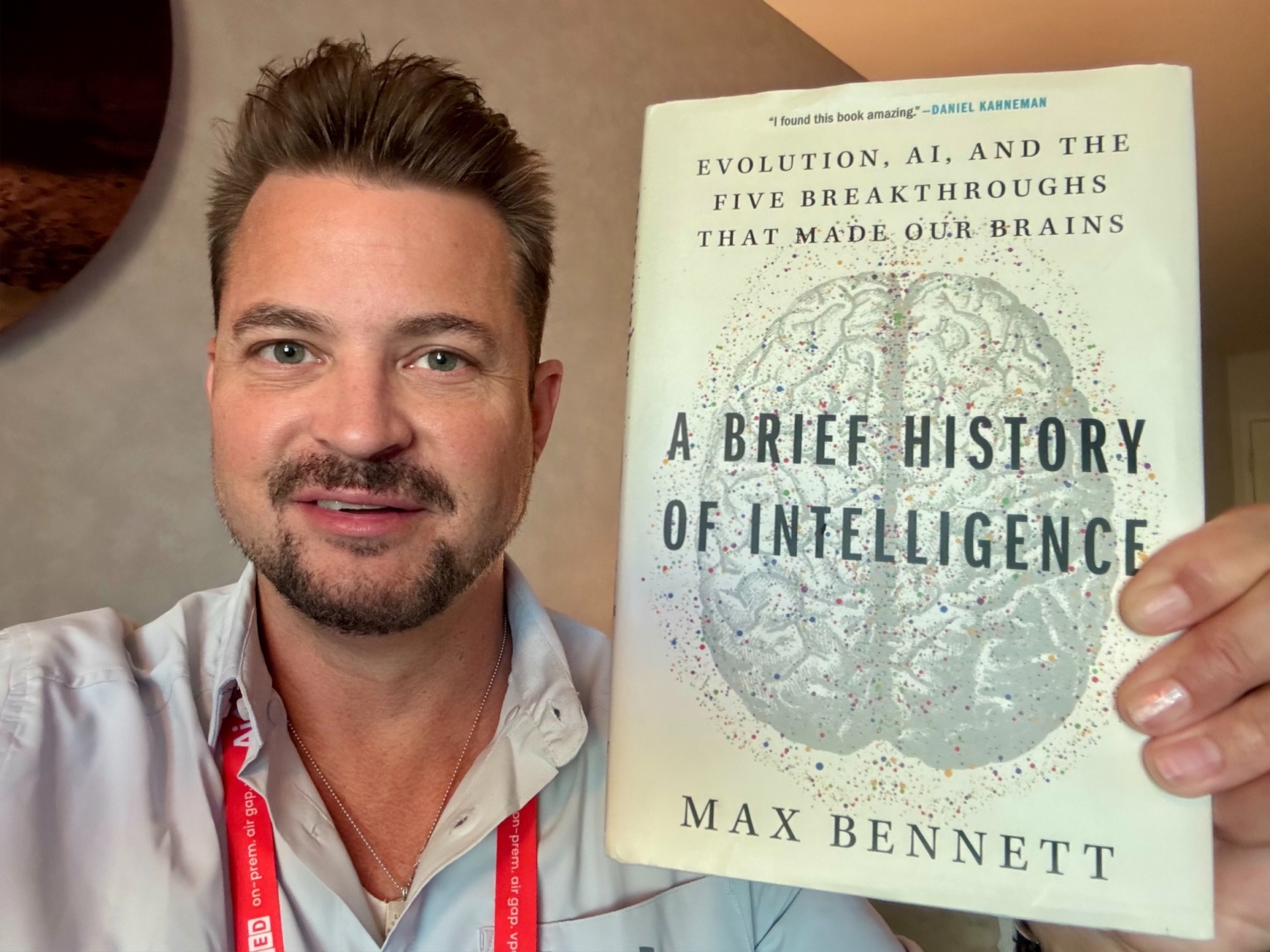
    Matt Mishak with A Brief History of Intelligence by Max Bennett

    A Brief History of Intelligence

    by Max Bennett

    For me, A Brief History of Intelligence wasn't just another science book — it was the most inspiring read of 2025. Max Bennett doesn't merely explain evolution and AI; he illuminates the arc of our cognitive journey from the simplest organisms to the complex minds we carry today and links that journey to the future of artificial intelligence in a way few authors have managed.

    Reading this book felt like a conversation with a brilliant guide who makes both neuroscience and AI feel vivid, urgent, and deeply meaningful. As someone immersed in law and technology, I found Bennett's insights not just informative but transformative — reminiscent of discussions at the Dartmouth Conference itself.

    Get the Book

    Praise from Visionaries

    "I found this book amazing. I read it through quickly because it was so interesting, then turned around and read much of it again."

    — Daniel Kahneman

    Nobel Laureate in Economics

    "I've been recommending A Brief History of Intelligence to everyone I know. A truly novel, beautifully crafted thesis on what intelligence is and how it has developed since the dawn of life itself."

    — Angela Duckworth

    Author of Grit

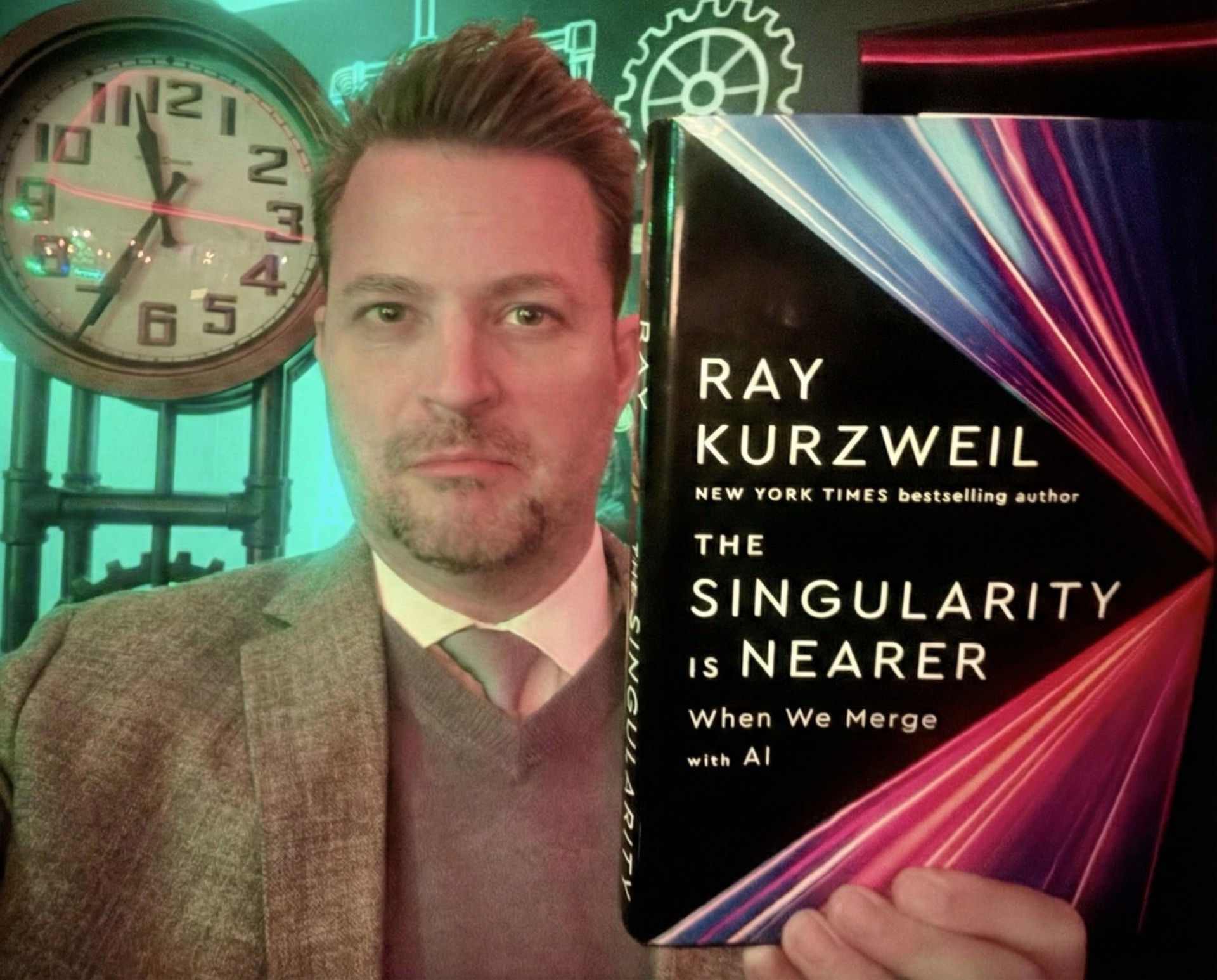
    Matt Mishak with The Singularity Is Nearer by Ray Kurzweil

    The Singularity Is Nearer

    by Ray Kurzweil

    Ray Kurzweil is not just a futurist — he's a prophet of exponential change. A student of Marvin Minsky, one of the founding minds behind the Dartmouth Conference, Kurzweil has been thinking about this moment longer than most institutions have been around.

    If you don't know Ray Kurzweil, you should. The Singularity Is Nearer makes one thing clear: the future isn't coming slowly — it's arriving all at once.

    Get the Book

    Praise from Visionaries

    "A fascinating exploration of our future, which raises the most profound philosophical questions."

    — Yuval Noah Harari

    Historian

    "Ray Kurzweil is the greatest oracle of our digital age. The Singularity Is Nearer is more than just a book—it's a survival guide for the technological renaissance we're about to experience."

    — Peter H. Diamandis, MD

    Futurist & Entrepreneur

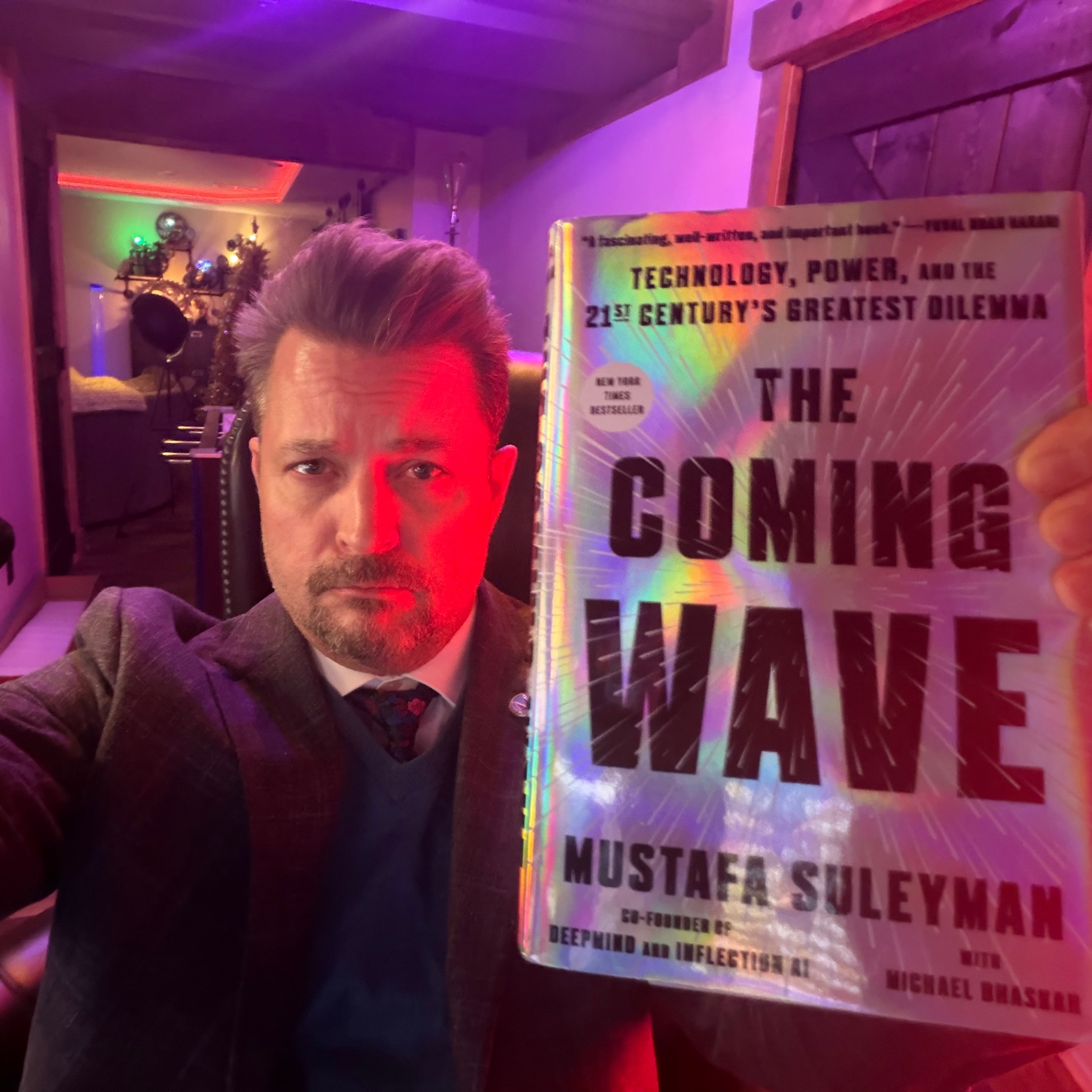
    Matt Mishak with The Coming Wave by Mustafa Suleyman

    The Coming Wave

    by Mustafa Suleyman & Michael Bhaskar

    This isn't a hype book about shiny tools. It's a sober, urgent examination of what happens when powerful technologies scale faster than our institutions, laws, and social norms. Suleyman's core message is simple but uncomfortable: the future is not something that merely happens to us. It requires participation.

    The coming wave of AI and biotechnology will not be safely "managed" by a small group of technologists or regulators alone. Containment, governance, and alignment demand broad engagement across professions, industries, and communities. Sitting on the sidelines is not a neutral position. Non-participation is still a choice, and usually a costly one.

    What makes this book especially relevant for LegalTek.ai is its insistence that responsibility must scale with capability. Lawyers, operators, founders, and leaders cannot outsource judgment to systems or defer hard questions to later. The work is now: designing guardrails, rethinking institutions, and choosing to engage rather than react. Participation is the point.

    Get the Book

    Praise from Visionaries

    "A fascinating, well-written, and important book."

    — Yuval Noah Harari

    Historian

    "One of the most important books of the year. Suleyman is one of the few people who truly understands both the promise and peril of AI."

    — Eric Schmidt

    Former CEO of Google

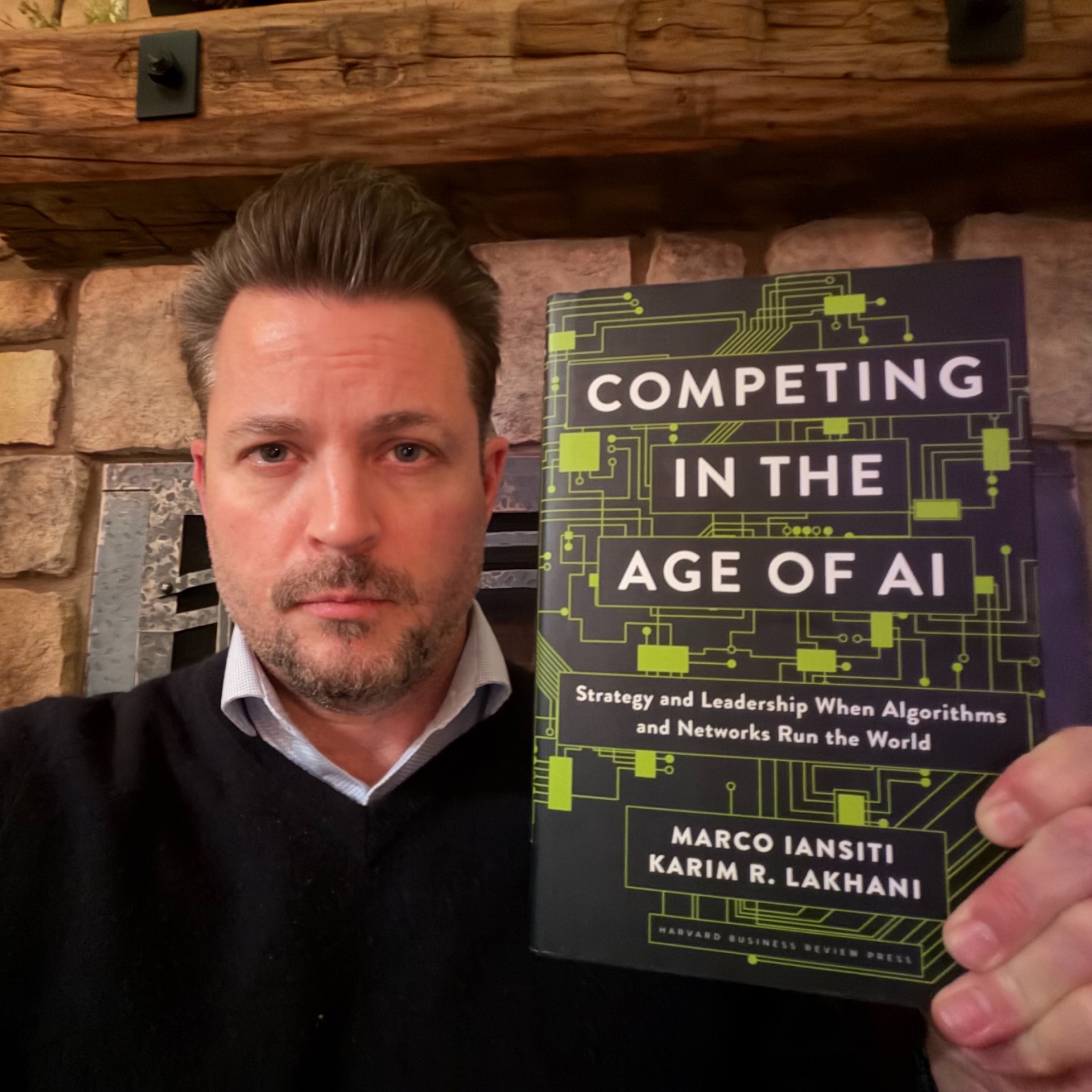
    Matt Mishak with Competing in the Age of AI by Marco Iansiti and Karim R. Lakhani

    Competing in the Age of AI

    by Marco Iansiti & Karim R. Lakhani

    Marco Iansiti and Karim R. Lakhani's Competing in the Age of AI is not a book about tools. It is a book about power, structure, and survival in an economy where software, data, and algorithms increasingly define competitive advantage. The central thesis is simple but unsettling: companies do not become AI-powered by sprinkling models on top of legacy processes. They must reorganize themselves around AI as a core operating logic.

    An AI-First organization treats data as infrastructure, not exhaust. Data lakes are not passive storage systems; they are living strategic assets continuously fed by operations, customers, and markets. The firms that win are those that design feedback loops where data improves models, models improve decisions, and decisions generate more data. This flywheel compounds faster than any traditional efficiency play.

    The book is particularly sharp on disruption. AI does not merely automate tasks; it collapses coordination costs. Entire layers of management, intermediaries, and professional gatekeepers become vulnerable when prediction and decision-making move closer to real time. This is why AI-driven firms tend to scale faster, operate with fewer humans per dollar of revenue, and exert outsized pressure on incumbents.

    Equally important is the authors' treatment of ethics and governance. AI systems embed values, whether intentionally or not. Bias, accountability, transparency, and trust are not compliance checkboxes; they are strategic concerns. Organizations that fail to govern AI responsibly risk regulatory backlash, reputational damage, and internal breakdowns of trust.

    Why this matters for LegalTek.ai: law, regulation, and professional services are precisely the kinds of industries ripe for AI-driven reconfiguration. Firms that treat AI as a bolt-on tool will fall behind. Firms that rethink workflows, data ownership, trust, and human judgment alongside AI will define the next era. If you are building, advising, regulating, or investing in the future of legal and professional services, this book belongs on your desk.

    Get the Book

    Praise from Visionaries

    "A compelling vision for how companies must transform to thrive in an AI-first world."

    — Satya Nadella

    CEO of Microsoft

    "Essential reading for any leader trying to understand how AI will reshape industries and competitive dynamics."

    — Reid Hoffman

    Co-founder of LinkedIn

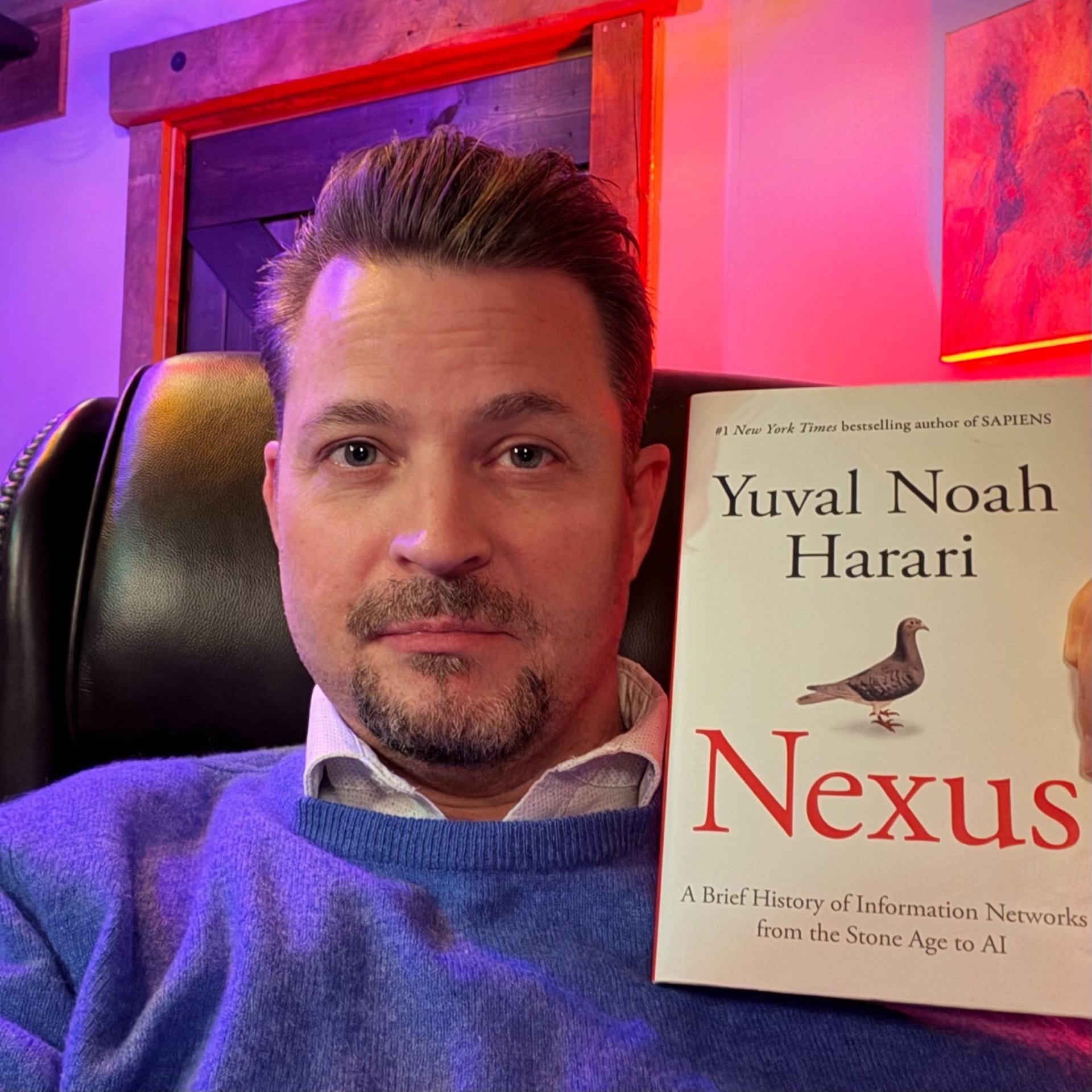
    Matt Mishak with Nexus by Yuval Noah Harari

    Nexus

    by Yuval Noah Harari

    Nexus by Yuval Noah Harari is a foundational text for anyone trying to understand how information systems shape power, institutions, and human behavior—especially as we enter an AI-driven era. Harari reframes history not as a story of tools or even ideas, but as a story of networks: who controls information flows, how trust is manufactured, and how coordination scales.

    For LegalTek.ai, this book matters because law is itself an information network. Courts, statutes, contracts, evidence, compliance regimes, and now AI models are all nodes in a living system that governs behavior at scale. Harari makes one idea uncomfortably clear: technology does not just make systems faster—it reshapes who holds authority and how legitimacy is created.

    He explores how information networks drift toward concentration, how automated decision systems can harden power asymmetries, and how societies repeatedly mistake efficiency for wisdom. These themes map directly onto modern legal technology questions around AI-assisted decision-making, automated compliance, algorithmic evidence, and the risk of opaque systems replacing human judgment.

    Key insights: First, information systems always encode values—neutral tools do not exist. This reinforces the need for explicit governance, auditability, and human oversight in legal AI. Second, scale changes ethics—what works for a small network can become dangerous when automated and deployed broadly. Third, institutions lag technology—law historically reacts after power has already shifted.

    Nexus supports a core LegalTek.ai principle: AI in law must be human-centered, transparent, and institutionally aware. The future of legal technology is not about replacing lawyers—it is about redesigning legal systems so that intelligence, whether human or artificial, serves fairness, legitimacy, and trust at scale. Highly recommended for anyone building, regulating, or relying on AI-driven legal systems.

    Get the Book

    Praise from Visionaries

    "Harari has done it again. Nexus is a sweeping, thought-provoking exploration of how information has shaped human history—and how AI might reshape our future."

    — Bill Gates

    Co-founder of Microsoft

    "A masterful synthesis of history, technology, and human nature. Essential reading for understanding where we're headed."

    — Daniel Kahneman

    Nobel Laureate in Economics

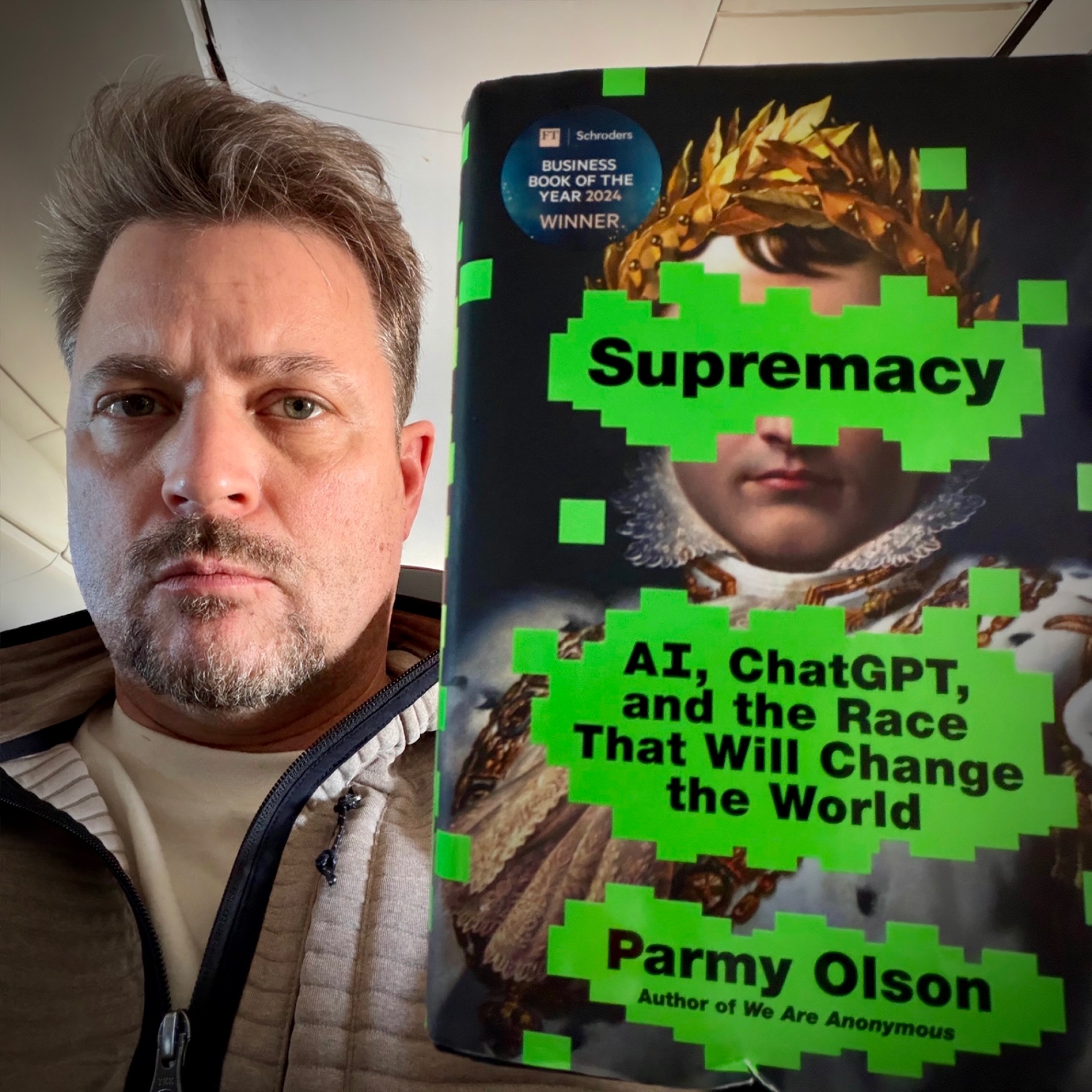
    Matt Mishak with Supremacy by Parmy Olson

    Supremacy

    by Parmy Olson

    Parmy Olson's Supremacy is the book I wish every lawyer, regulator, and founder would read before making their next move in AI. Winner of the Financial Times and Schroders Business Book of the Year 2024, this is not another breathless hype piece about what AI might do someday. It is a meticulously reported account of what has already happened — and what it means for power, competition, and control.

    Olson, a Bloomberg columnist and author of We Are Anonymous, brings a journalist's rigor and a storyteller's instinct to the AI arms race between OpenAI and Google DeepMind. She traces how a small number of researchers, executives, and investors are making decisions that will reshape every industry on earth — including law. The central tension is not technical; it is human: ambition versus caution, open research versus commercial secrecy, safety versus speed.

    What makes this book essential for LegalTek.ai readers is its unflinching examination of concentration risk. The foundation models that power legal AI products are controlled by a handful of companies. Olson documents how acquisitions, talent wars, and compute monopolies are narrowing the field in ways that should concern anyone building on top of these platforms. If you are a legal technology founder or an enterprise buyer evaluating AI vendors, this book provides the geopolitical and corporate context you cannot afford to ignore.

    Supremacy reinforces a core LegalTek.ai principle: understanding AI is not optional for legal professionals. The race for AI supremacy is not happening in a vacuum — it is reshaping the infrastructure of knowledge work itself. Lawyers who understand the forces Olson describes will be better positioned to advise clients, evaluate tools, and navigate the regulatory landscape that is still being written.

    Get the Book

    Praise from Visionaries

    "Astonishing... Olson has exclusive access to a network of high-level sources and she uses it to devastating effect."

    — Financial Times

    Business Book of the Year 2024

    "A deeply reported, utterly gripping account of the most consequential technology race of our time."

    — Tony Fadell

    Creator of the iPod, Author of Build

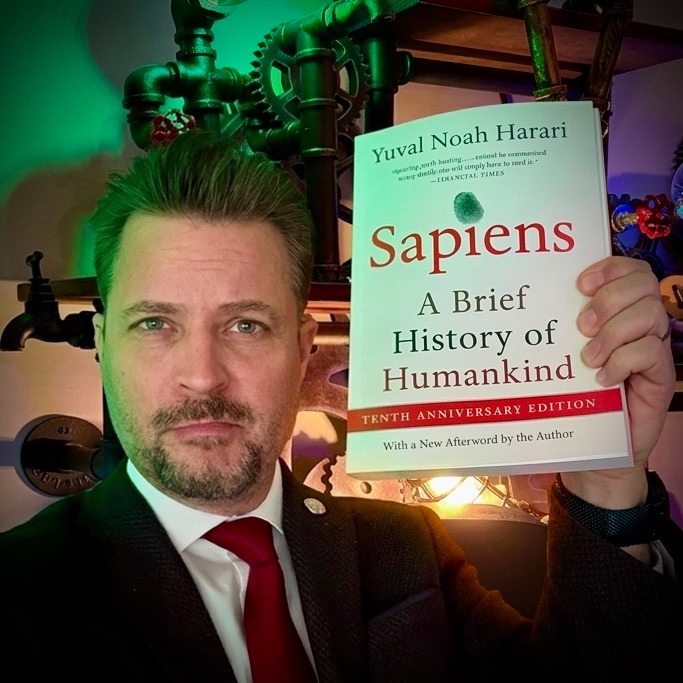
    Matt Mishak with Sapiens by Yuval Noah Harari

    Sapiens: A Brief History of Humankind

    by Yuval Noah Harari

    Sapiens is the book that rewired how I think about everything — law, technology, institutions, and human cooperation itself. Yuval Noah Harari doesn't just survey 70,000 years of human history; he dismantles the stories we tell ourselves about why civilization works. His central insight is deceptively simple: humans dominate the planet not because we are the smartest or strongest, but because we are the only species that can cooperate flexibly in large numbers — and we do it through shared fictions.

    For anyone in law or legal technology, this idea should hit like a thunderbolt. Laws, contracts, corporations, courts, constitutions — these are all shared fictions. They work because enough people believe in them. Harari forces you to see the scaffolding behind the systems we take for granted, and once you see it, you cannot unsee it.

    As AI begins to reshape how we create, interpret, and enforce these shared fictions, Sapiens becomes even more essential. If you want to understand where legal systems came from — and why they are so vulnerable to disruption — start here. This is the foundation that makes Nexus, The Coming Wave, and every other book on this list hit harder.

    Get the Book

    Praise from Visionaries

    "Interesting and provocative... It gives you a sense of how briefly we've been on this earth."

    — Barack Obama

    44th President of the United States

    "I would recommend this book to anyone interested in a fun, engaging look at early human history... You'll have a hard time putting it down."

    — Bill Gates

    Co-founder of Microsoft

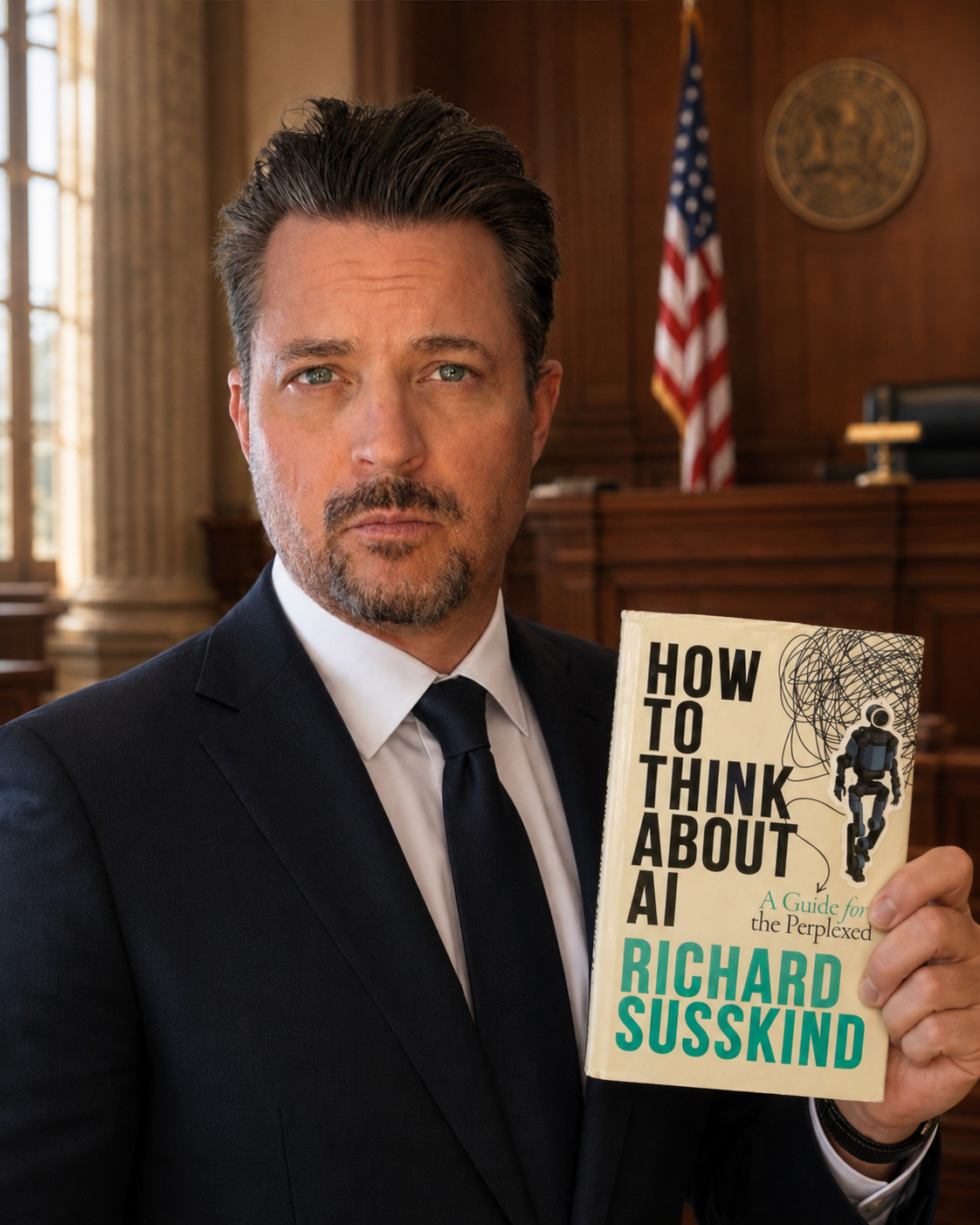
    Matt Mishak with How to Think About AI by Richard Susskind

    How to Think About AI: A Guide for the Perplexed

    by Richard Susskind

    Richard Susskind has spent four decades thinking about the future of professional work, and How to Think About AI is the distilled vocabulary every lawyer needs for the decade ahead. This is not a tactical book about prompts or tools — it is a structured way of thinking about what AI is, what it is becoming, and what it implies for the institutions that depend on human judgment.

    The chapter that most repays a careful read is Susskind's framing of the four long-run scenarios for the human–AI relationship: AI takeover, merger, peaceful coexistence, and shut-off. He treats each seriously, not as prediction but as the realistic shape of the possibility space. His argument is that any serious conversation about AI policy or professional practice has to hold all four open at once — and most public debate collapses prematurely into one.

    For Ohio attorneys orienting around the COUNSEL Framework, this book pairs naturally with ABA Formal Opinion 512 and the Ohio Supreme Court's AI Task Force Report. The opinions tell you what your duties are. Susskind helps you decide what you believe about where the technology is headed — and that belief shapes every governance and oversight choice that follows.

    Get the Book

    Praise from Visionaries

    "Susskind is the world's leading authority on the future of legal services and one of the most lucid writers on AI for non-specialists."

    — The Times (London)

    Review

    "An indispensable guide for anyone who wants to think clearly about what AI means for their work, their profession, and their life."

    — Daniel Susskind

    Author of A World Without Work

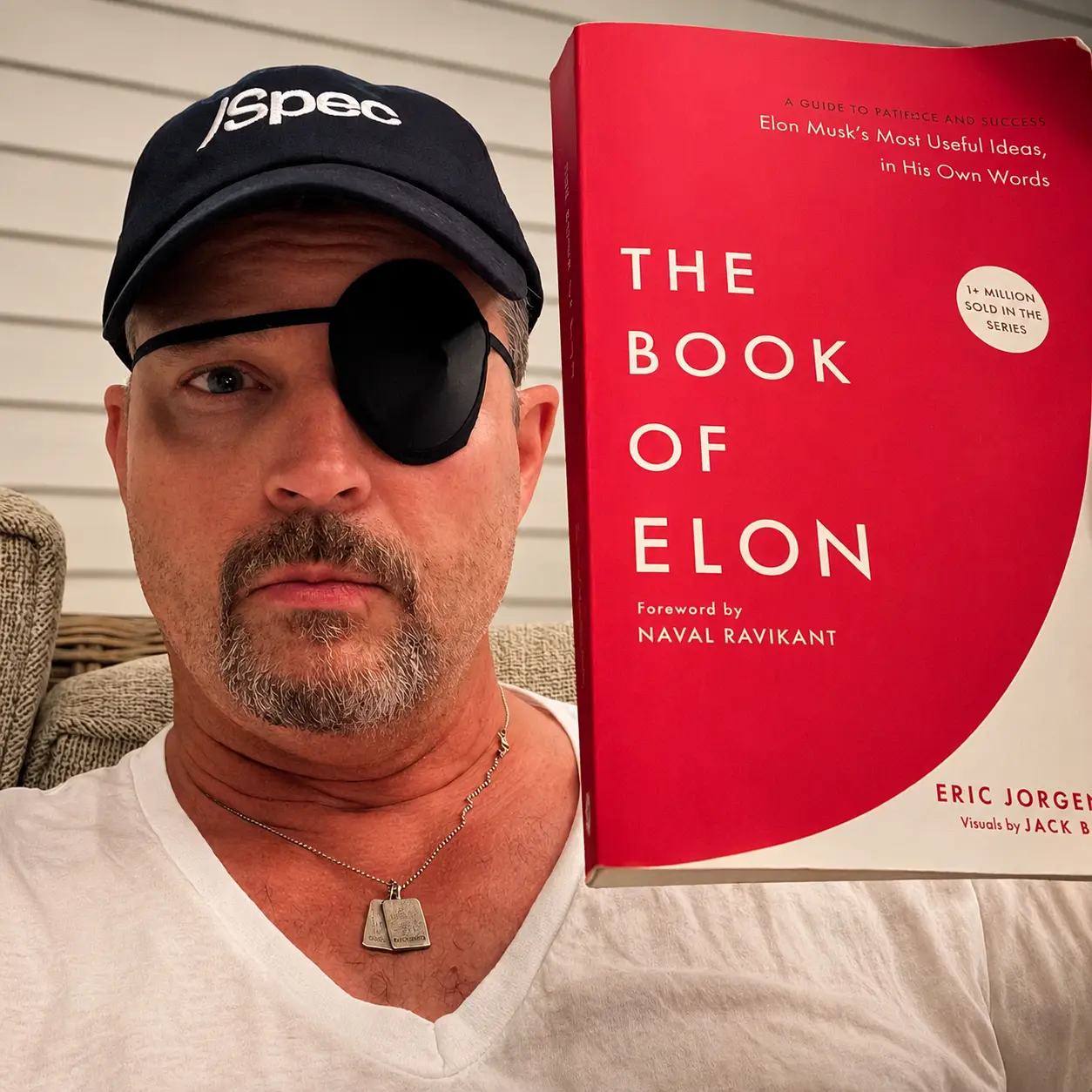
    Matt Mishak with The Book of Elon by Eric Jorgenson

    The Book of Elon: Elon Musk's Most Useful Ideas, in His Own Words

    by Eric Jorgenson (Foreword by Naval Ravikant)

    Eric Jorgenson — the same curator who gave us The Almanack of Naval Ravikant — turns his method on Elon Musk. The Book of Elon is not a biography and not a hagiography. It is a disciplined distillation of Musk's own words on first-principles thinking, engineering, risk, capital, talent, and the long time-horizons required to build things that actually matter. Naval's foreword frames the through-line: patience compounds, and so does judgment.

    For lawyers, founders, and operators in the AI era, the value here is not Musk-worship — it is method. First-principles reasoning is exactly the discipline the profession is going to need as AI collapses coordination costs and forces us to rebuild workflows, evidence standards, and governance from the ground up. This book belongs on the shelf next to Susskind and Bennett as a working manual for how to think when the ground is moving.

    Get the Book

    Praise from Visionaries

    "Elon is the rare founder who operates from first principles at every layer of the stack — physics, engineering, capital, and time. This collection is the closest thing to a manual for how he thinks."

    — Naval Ravikant

    Founder, AngelList (from the Foreword)

    AI Strategy and Governance for Modern Law Firms

    Founded by Matthew A. Mishak, Esq. — Harvard Business School Executive Education Graduate, MIT Sloan Artificial Intelligence Graduate.

    Mission

    LegalTek.ai proves you don't have to choose between speed and care, scale and quality, efficiency and ethics. Dedicated to closing the justice gap through ethical AI adoption.

    The COUNSEL Framework for Ethical AI in Law

    Mapped to and operationalizing ABA Formal Opinion 512 (the ABA does not endorse vendor frameworks). COUNSEL stands for: Confidentiality, Oversight, Understanding, Notification, Scrutiny, Equity, and Lifetime Learning.

    SilverTung AI Concierge

    A managed AI service for legal professionals with human oversight, ethical guardrails, and COUNSEL Framework compliance.

    Core Values

    Contact

    Website: https://legaltek.ai | Twitter: @legaltek_ai