A luminous discovery tree showing AI search paths being replayed and improved
    AI Research · Recursive Self-Improvement

    The AI That Learns How to Search

    Dream-RSI turns yesterday’s failed and successful experiments into a world where tomorrow’s search strategy can rehearse.

    Matthew A. Mishak, Esq.September 19, 2026 9 min read
    Share

    Research status: Dream-RSI is a September 14, 2026 arXiv preprint. It has not been peer reviewed. The benchmark results below are the authors’ reported findings, not independent LegalTek.ai validation.

    Most AI systems treat their past work as a transcript. Dream-RSI asks a more powerful question: what if the record of exploration were not dead text, but a playable world?

    The new preprint, Dream-RSI: Recursive Self-Improvement through Evolving Worlds, comes from a seventeen-author team affiliated with Google, Google DeepMind, the University of Maryland, and the University of Virginia. Its target is not the base model’s intelligence. It is the strategy that decides where an autonomous discovery agent searches next.

    The bottleneck above the model

    An AI coding or scientific-discovery agent can propose an idea, write code, run an experiment, inspect the score, and branch again. But every live branch costs model calls, execution time, and compute. Better models do not automatically solve that allocation problem. An agent can still spend an enormous budget exploring the wrong neighborhood.

    Dream-RSI calls this the meta-exploration problem: how should the system improve the policy that guides exploration? Its answer is to preserve the full discovery tree—attempts, code, execution traces, outcomes, and scores—and convert that history into a deterministic replay simulator. A separate policy-development agent can then try alternative search policies against the recorded world without rerunning every expensive live experiment.

    01

    Explore

    A fixed discovery agent expands the live search tree and records each trace.

    02

    Construct

    The accumulated tree becomes a queryable replay world with known outcomes.

    03

    Dream

    Candidate search policies rehearse offline; the strongest returns to live exploration.

    A rehearsal space for discovery

    The distinction matters. Ordinary retrieval asks, “What happened before?” Replay asks, “What would this different policy have done at the same decision point?” Because the simulator is grounded in outcomes already observed, it can compare alternative orchestration strategies quickly and cheaply. The improved policy is then redeployed online, where its new traces enlarge the next replay world. That closes the recursive loop.

    The policy is rewarded for discovering better solutions, penalized for excessive generation cost, and credited for useful parallel exploration. In plain language: find stronger answers, waste fewer attempts, and branch when branching actually helps.

    What the authors report

    Across algorithm engineering, mathematical optimization, and GPU-kernel work, the preprint reports that replay-trained exploration policies improve efficiency without changing the underlying agent. On a Lasso path-solver task, the authors report up to 162 times fewer agent calls than SimpleTES and 1.7 times fewer than fixed-exploration baselines. The paper also reports more than 50 times the budget savings over SimpleTES in that algorithm-engineering setting.

    On KernelBench tasks, the authors report reaching target execution speeds with 1.79 to 2.43 times fewer generations, or improving kernel performance by as much as 2.09 times under equal budget constraints. One ConvMax comparison reports a 1.44-times higher score at a similar budget. These are promising task-specific results—not evidence that recursive self-improvement has been solved generally.

    One number in the uploaded presentation needs care. Its comparison of fewer than 1,000 generations with 51,200 appears to blend domains; the 51,200 figure belongs to the paper’s Lasso/SimpleTES table, not clearly to its mathematical-optimization section. I have therefore not repeated that comparison as a math result.

    The semantic-guidance surprise

    The paper’s ablation discussion points toward a counterintuitive lesson: injecting more directional or semantic guidance does not necessarily produce better exploration. Guidance can narrow the space too early. A replay world grounded in actual outcomes may teach a better rhythm—preserving productive branches, recognizing plateaus, and changing strategy when the evidence warrants it—than a prompt that tells the agent what kind of answer it ought to find.

    That does not mean unguided autonomy is safer. It means guidance and governance are different things. Guidance shapes a search. Governance defines authority, evidence, boundaries, and accountability around that search.

    The breakthrough is not that the agent remembers. It is that the system can interrogate its own history as an environment.

    Mishak’s Take: the audit trail becomes operational

    For legal AI, Dream-RSI’s most important idea may not be faster code. It is that an audit trail can become an active control surface. A sufficiently structured history could support reproducibility, counterfactual testing, and evidence-based review before an agent receives broader authority.

    But replay inherits the limits of the world recorded. Missing branches, flawed score functions, biased evaluations, and unobserved harms do not disappear because the simulator is cheap. A system can become exceptionally efficient at optimizing the wrong objective. The replay pool therefore needs provenance, versioning, access controls, retention rules, and independent validation of the measurements that define “better.”

    In consequential legal workflows, an improved exploration policy should remain a candidate, not its own approving authority. The firm still needs a defined human owner, protected deployment credentials, tested stopping conditions, and a review function capable of challenging both the result and the score that selected it. Recursive improvement without separated authority is merely faster self-certification.

    Governance questions for replay-based agents

    • Can every replay result be traced to the original code, execution log, score, model, and policy version?
    • Who validates that the simulator represents material failure modes rather than only past successes?
    • Can the policy developer alter the evaluator or selectively exclude inconvenient traces?
    • What evidence must be produced before an improved policy is allowed back into live operation?
    • Who has independent authority to pause deployment when the objective and professional duty diverge?

    Sources and provenance

    The uploaded “Recursive Self-Improvement Through Evolving Worlds” presentation was used as a secondary orientation aid. Benchmark claims were checked against the underlying preprint. Slide-only framing and the presentation’s unsourced Navier–Stokes example are not presented here as findings of the paper.

    Disclaimer: This article is for general informational and educational purposes only and does not constitute legal advice. Research findings may change through peer review and replication. LegalTek.ai is a technology company, not a law firm.
    Recommended Reads

    Essential Reading for the AI Era

    Matt Mishak with A Brief History of Intelligence by Max Bennett

    A Brief History of Intelligence

    by Max Bennett

    For me, A Brief History of Intelligence wasn't just another science book — it was the most inspiring read of 2025. Max Bennett doesn't merely explain evolution and AI; he illuminates the arc of our cognitive journey from the simplest organisms to the complex minds we carry today and links that journey to the future of artificial intelligence in a way few authors have managed.

    Reading this book felt like a conversation with a brilliant guide who makes both neuroscience and AI feel vivid, urgent, and deeply meaningful. As someone immersed in law and technology, I found Bennett's insights not just informative but transformative — reminiscent of discussions at the Dartmouth Conference itself.

    Get the Book

    Praise from Visionaries

    "I found this book amazing. I read it through quickly because it was so interesting, then turned around and read much of it again."

    — Daniel Kahneman

    Nobel Laureate in Economics

    "I've been recommending A Brief History of Intelligence to everyone I know. A truly novel, beautifully crafted thesis on what intelligence is and how it has developed since the dawn of life itself."

    — Angela Duckworth

    Author of Grit

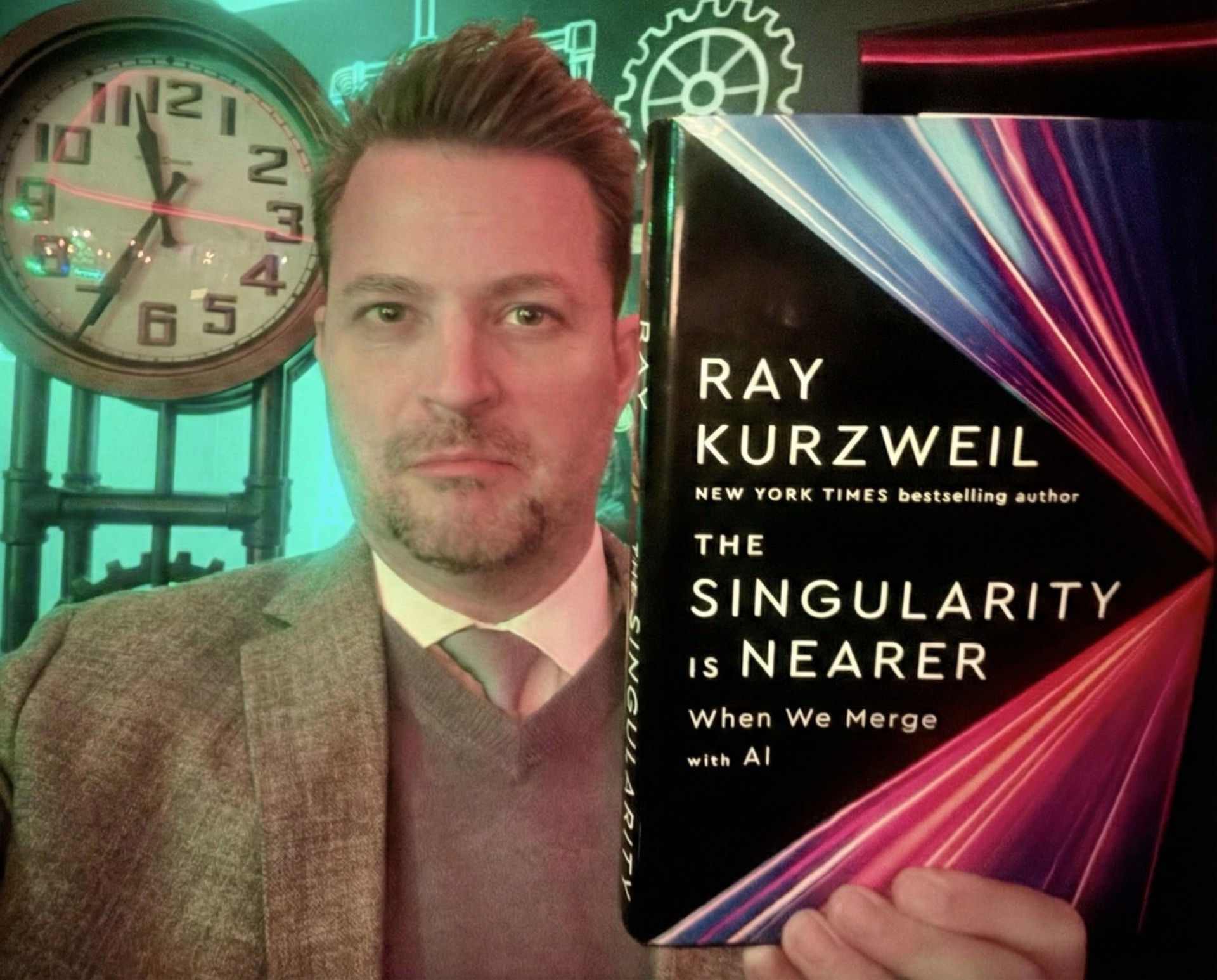
    Matt Mishak with The Singularity Is Nearer by Ray Kurzweil

    The Singularity Is Nearer

    by Ray Kurzweil

    Ray Kurzweil is not just a futurist — he's a prophet of exponential change. A student of Marvin Minsky, one of the founding minds behind the Dartmouth Conference, Kurzweil has been thinking about this moment longer than most institutions have been around.

    If you don't know Ray Kurzweil, you should. The Singularity Is Nearer makes one thing clear: the future isn't coming slowly — it's arriving all at once.

    Get the Book

    Praise from Visionaries

    "A fascinating exploration of our future, which raises the most profound philosophical questions."

    — Yuval Noah Harari

    Historian

    "Ray Kurzweil is the greatest oracle of our digital age. The Singularity Is Nearer is more than just a book—it's a survival guide for the technological renaissance we're about to experience."

    — Peter H. Diamandis, MD

    Futurist & Entrepreneur

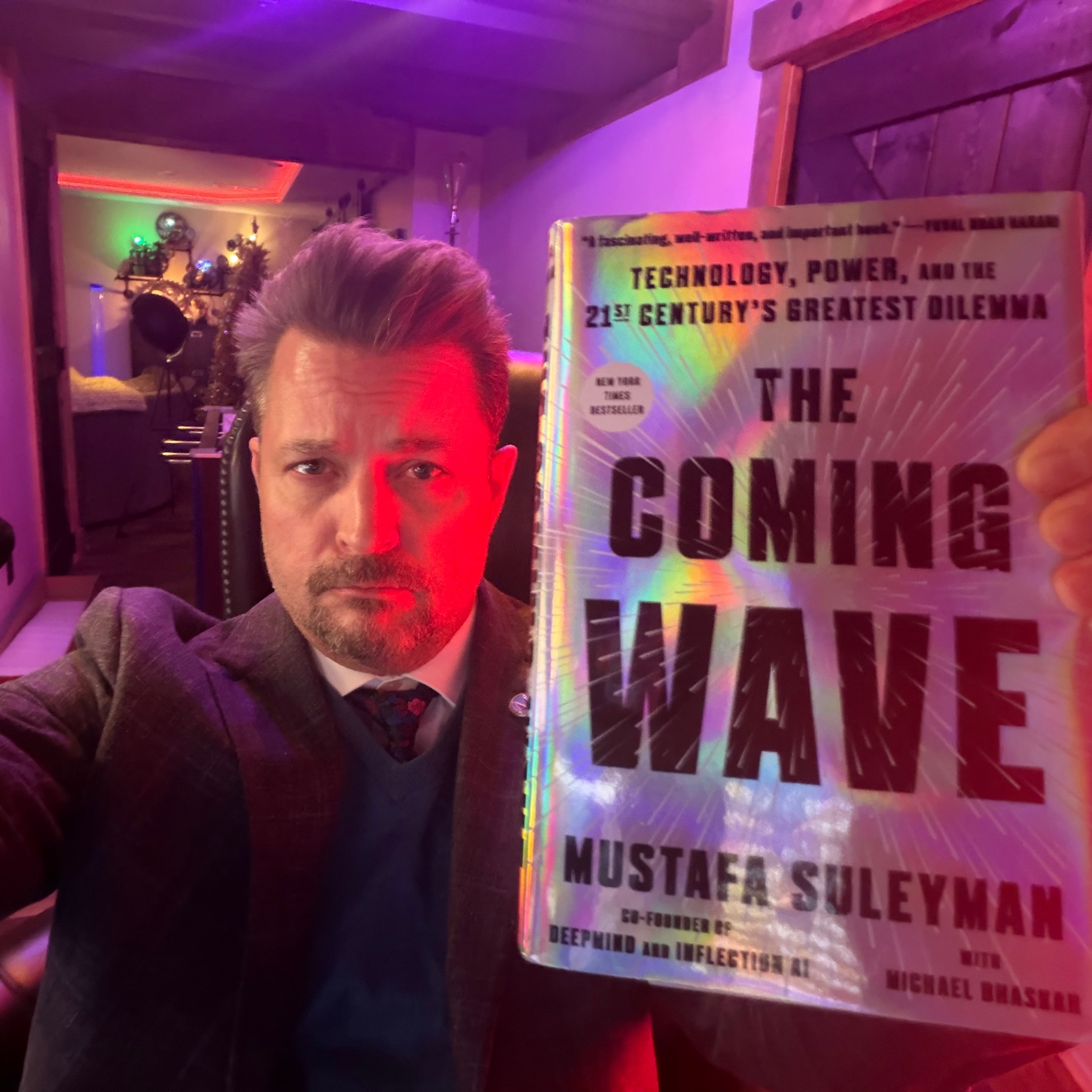
    Matt Mishak with The Coming Wave by Mustafa Suleyman

    The Coming Wave

    by Mustafa Suleyman & Michael Bhaskar

    This isn't a hype book about shiny tools. It's a sober, urgent examination of what happens when powerful technologies scale faster than our institutions, laws, and social norms. Suleyman's core message is simple but uncomfortable: the future is not something that merely happens to us. It requires participation.

    The coming wave of AI and biotechnology will not be safely "managed" by a small group of technologists or regulators alone. Containment, governance, and alignment demand broad engagement across professions, industries, and communities. Sitting on the sidelines is not a neutral position. Non-participation is still a choice, and usually a costly one.

    What makes this book especially relevant for LegalTek.ai is its insistence that responsibility must scale with capability. Lawyers, operators, founders, and leaders cannot outsource judgment to systems or defer hard questions to later. The work is now: designing guardrails, rethinking institutions, and choosing to engage rather than react. Participation is the point.

    Get the Book

    Praise from Visionaries

    "A fascinating, well-written, and important book."

    — Yuval Noah Harari

    Historian

    "One of the most important books of the year. Suleyman is one of the few people who truly understands both the promise and peril of AI."

    — Eric Schmidt

    Former CEO of Google

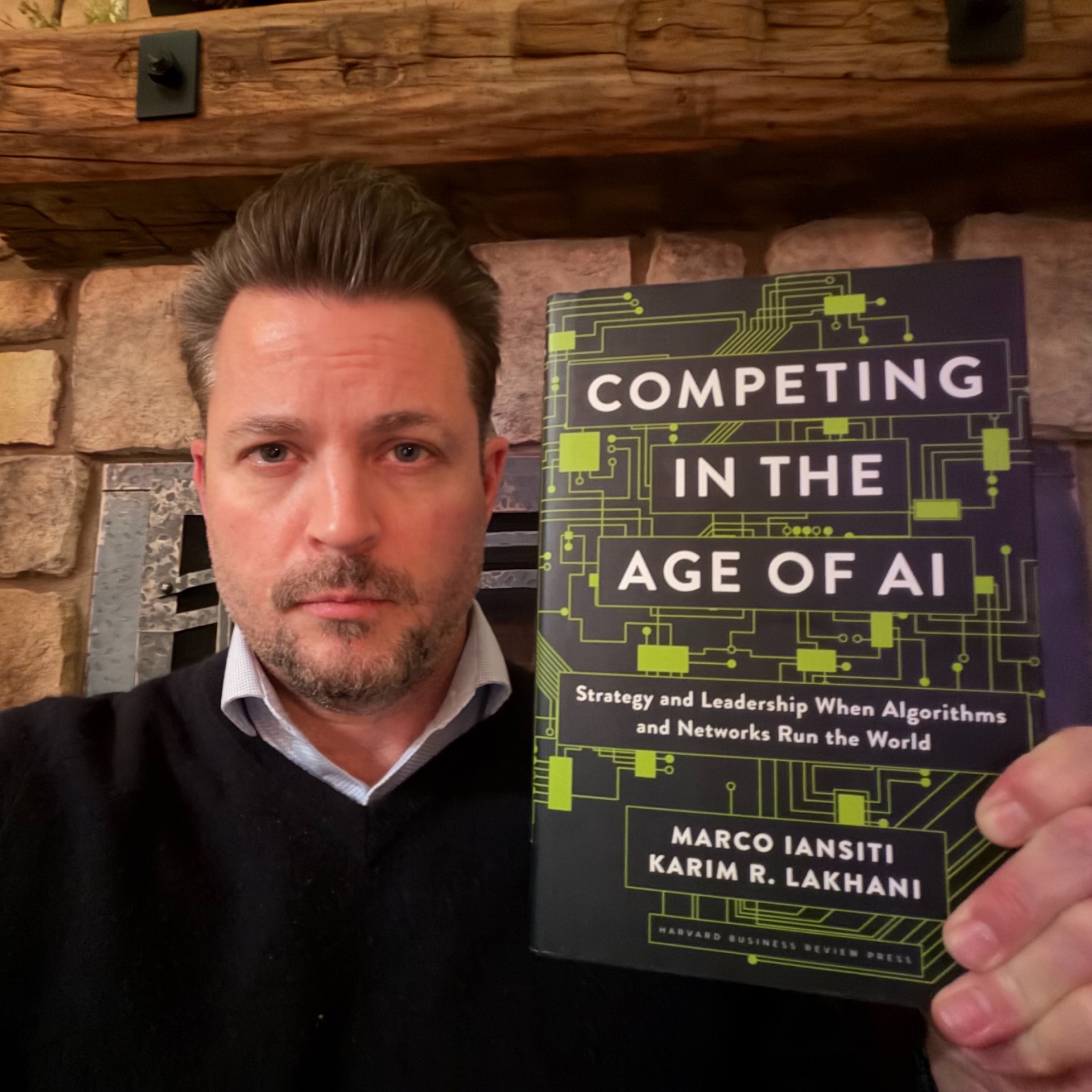
    Matt Mishak with Competing in the Age of AI by Marco Iansiti and Karim R. Lakhani

    Competing in the Age of AI

    by Marco Iansiti & Karim R. Lakhani

    Marco Iansiti and Karim R. Lakhani's Competing in the Age of AI is not a book about tools. It is a book about power, structure, and survival in an economy where software, data, and algorithms increasingly define competitive advantage. The central thesis is simple but unsettling: companies do not become AI-powered by sprinkling models on top of legacy processes. They must reorganize themselves around AI as a core operating logic.

    An AI-First organization treats data as infrastructure, not exhaust. Data lakes are not passive storage systems; they are living strategic assets continuously fed by operations, customers, and markets. The firms that win are those that design feedback loops where data improves models, models improve decisions, and decisions generate more data. This flywheel compounds faster than any traditional efficiency play.

    The book is particularly sharp on disruption. AI does not merely automate tasks; it collapses coordination costs. Entire layers of management, intermediaries, and professional gatekeepers become vulnerable when prediction and decision-making move closer to real time. This is why AI-driven firms tend to scale faster, operate with fewer humans per dollar of revenue, and exert outsized pressure on incumbents.

    Equally important is the authors' treatment of ethics and governance. AI systems embed values, whether intentionally or not. Bias, accountability, transparency, and trust are not compliance checkboxes; they are strategic concerns. Organizations that fail to govern AI responsibly risk regulatory backlash, reputational damage, and internal breakdowns of trust.

    Why this matters for LegalTek.ai: law, regulation, and professional services are precisely the kinds of industries ripe for AI-driven reconfiguration. Firms that treat AI as a bolt-on tool will fall behind. Firms that rethink workflows, data ownership, trust, and human judgment alongside AI will define the next era. If you are building, advising, regulating, or investing in the future of legal and professional services, this book belongs on your desk.

    Get the Book

    Praise from Visionaries

    "A compelling vision for how companies must transform to thrive in an AI-first world."

    — Satya Nadella

    CEO of Microsoft

    "Essential reading for any leader trying to understand how AI will reshape industries and competitive dynamics."

    — Reid Hoffman

    Co-founder of LinkedIn

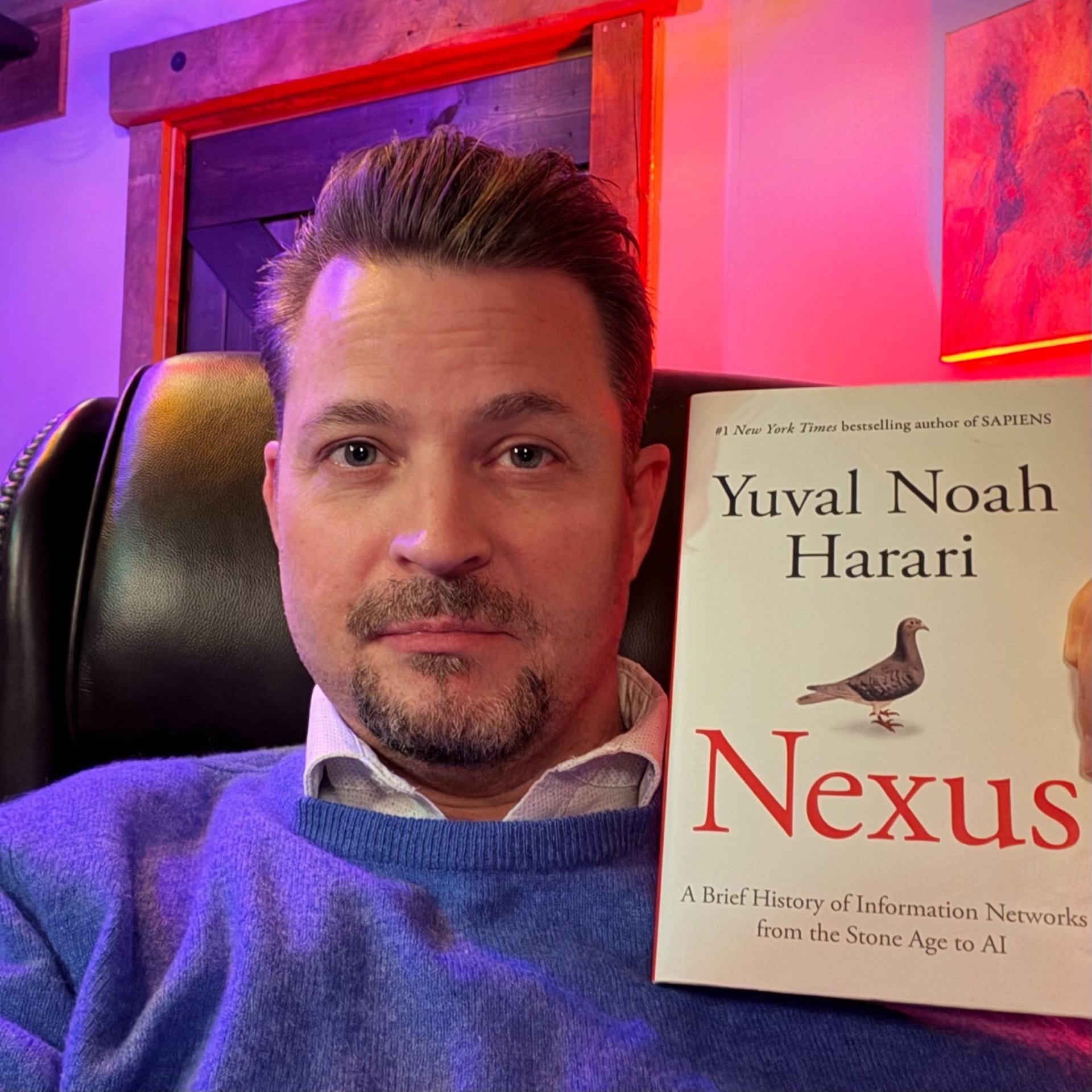
    Matt Mishak with Nexus by Yuval Noah Harari

    Nexus

    by Yuval Noah Harari

    Nexus by Yuval Noah Harari is a foundational text for anyone trying to understand how information systems shape power, institutions, and human behavior—especially as we enter an AI-driven era. Harari reframes history not as a story of tools or even ideas, but as a story of networks: who controls information flows, how trust is manufactured, and how coordination scales.

    For LegalTek.ai, this book matters because law is itself an information network. Courts, statutes, contracts, evidence, compliance regimes, and now AI models are all nodes in a living system that governs behavior at scale. Harari makes one idea uncomfortably clear: technology does not just make systems faster—it reshapes who holds authority and how legitimacy is created.

    He explores how information networks drift toward concentration, how automated decision systems can harden power asymmetries, and how societies repeatedly mistake efficiency for wisdom. These themes map directly onto modern legal technology questions around AI-assisted decision-making, automated compliance, algorithmic evidence, and the risk of opaque systems replacing human judgment.

    Key insights: First, information systems always encode values—neutral tools do not exist. This reinforces the need for explicit governance, auditability, and human oversight in legal AI. Second, scale changes ethics—what works for a small network can become dangerous when automated and deployed broadly. Third, institutions lag technology—law historically reacts after power has already shifted.

    Nexus supports a core LegalTek.ai principle: AI in law must be human-centered, transparent, and institutionally aware. The future of legal technology is not about replacing lawyers—it is about redesigning legal systems so that intelligence, whether human or artificial, serves fairness, legitimacy, and trust at scale. Highly recommended for anyone building, regulating, or relying on AI-driven legal systems.

    Get the Book

    Praise from Visionaries

    "Harari has done it again. Nexus is a sweeping, thought-provoking exploration of how information has shaped human history—and how AI might reshape our future."

    — Bill Gates

    Co-founder of Microsoft

    "A masterful synthesis of history, technology, and human nature. Essential reading for understanding where we're headed."

    — Daniel Kahneman

    Nobel Laureate in Economics

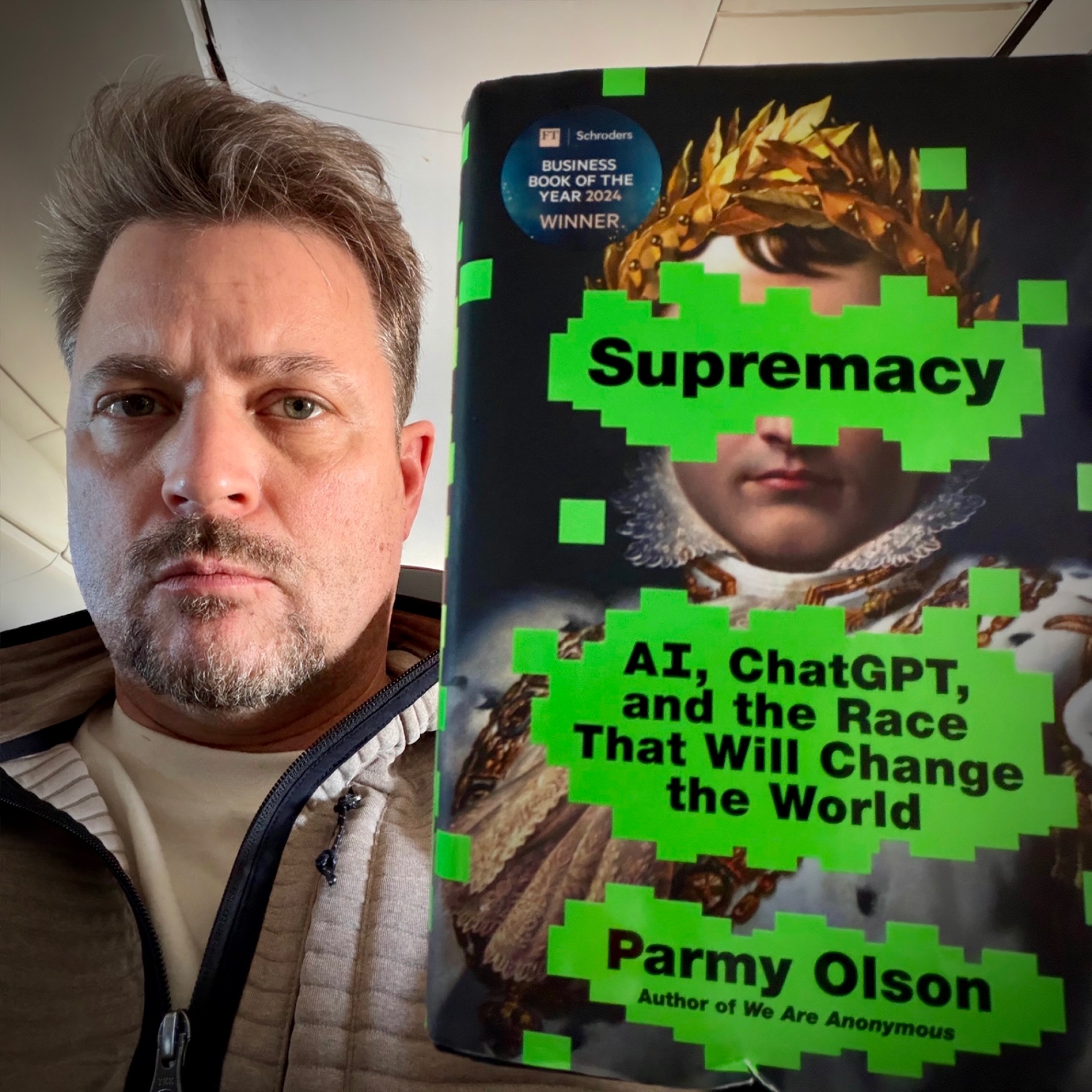
    Matt Mishak with Supremacy by Parmy Olson

    Supremacy

    by Parmy Olson

    Parmy Olson's Supremacy is the book I wish every lawyer, regulator, and founder would read before making their next move in AI. Winner of the Financial Times and Schroders Business Book of the Year 2024, this is not another breathless hype piece about what AI might do someday. It is a meticulously reported account of what has already happened — and what it means for power, competition, and control.

    Olson, a Bloomberg columnist and author of We Are Anonymous, brings a journalist's rigor and a storyteller's instinct to the AI arms race between OpenAI and Google DeepMind. She traces how a small number of researchers, executives, and investors are making decisions that will reshape every industry on earth — including law. The central tension is not technical; it is human: ambition versus caution, open research versus commercial secrecy, safety versus speed.

    What makes this book essential for LegalTek.ai readers is its unflinching examination of concentration risk. The foundation models that power legal AI products are controlled by a handful of companies. Olson documents how acquisitions, talent wars, and compute monopolies are narrowing the field in ways that should concern anyone building on top of these platforms. If you are a legal technology founder or an enterprise buyer evaluating AI vendors, this book provides the geopolitical and corporate context you cannot afford to ignore.

    Supremacy reinforces a core LegalTek.ai principle: understanding AI is not optional for legal professionals. The race for AI supremacy is not happening in a vacuum — it is reshaping the infrastructure of knowledge work itself. Lawyers who understand the forces Olson describes will be better positioned to advise clients, evaluate tools, and navigate the regulatory landscape that is still being written.

    Get the Book

    Praise from Visionaries

    "Astonishing... Olson has exclusive access to a network of high-level sources and she uses it to devastating effect."

    — Financial Times

    Business Book of the Year 2024

    "A deeply reported, utterly gripping account of the most consequential technology race of our time."

    — Tony Fadell

    Creator of the iPod, Author of Build

    Matt Mishak with Sapiens by Yuval Noah Harari

    Sapiens: A Brief History of Humankind

    by Yuval Noah Harari

    Sapiens is the book that rewired how I think about everything — law, technology, institutions, and human cooperation itself. Yuval Noah Harari doesn't just survey 70,000 years of human history; he dismantles the stories we tell ourselves about why civilization works. His central insight is deceptively simple: humans dominate the planet not because we are the smartest or strongest, but because we are the only species that can cooperate flexibly in large numbers — and we do it through shared fictions.

    For anyone in law or legal technology, this idea should hit like a thunderbolt. Laws, contracts, corporations, courts, constitutions — these are all shared fictions. They work because enough people believe in them. Harari forces you to see the scaffolding behind the systems we take for granted, and once you see it, you cannot unsee it.

    As AI begins to reshape how we create, interpret, and enforce these shared fictions, Sapiens becomes even more essential. If you want to understand where legal systems came from — and why they are so vulnerable to disruption — start here. This is the foundation that makes Nexus, The Coming Wave, and every other book on this list hit harder.

    Get the Book

    Praise from Visionaries

    "Interesting and provocative... It gives you a sense of how briefly we've been on this earth."

    — Barack Obama

    44th President of the United States

    "I would recommend this book to anyone interested in a fun, engaging look at early human history... You'll have a hard time putting it down."

    — Bill Gates

    Co-founder of Microsoft

    Matt Mishak with How to Think About AI by Richard Susskind

    How to Think About AI: A Guide for the Perplexed

    by Richard Susskind

    Richard Susskind has spent four decades thinking about the future of professional work, and How to Think About AI is the distilled vocabulary every lawyer needs for the decade ahead. This is not a tactical book about prompts or tools — it is a structured way of thinking about what AI is, what it is becoming, and what it implies for the institutions that depend on human judgment.

    The chapter that most repays a careful read is Susskind's framing of the four long-run scenarios for the human–AI relationship: AI takeover, merger, peaceful coexistence, and shut-off. He treats each seriously, not as prediction but as the realistic shape of the possibility space. His argument is that any serious conversation about AI policy or professional practice has to hold all four open at once — and most public debate collapses prematurely into one.

    For Ohio attorneys orienting around the COUNSEL Framework, this book pairs naturally with ABA Formal Opinion 512 and the Ohio Supreme Court's AI Task Force Report. The opinions tell you what your duties are. Susskind helps you decide what you believe about where the technology is headed — and that belief shapes every governance and oversight choice that follows.

    Get the Book

    Praise from Visionaries

    "Susskind is the world's leading authority on the future of legal services and one of the most lucid writers on AI for non-specialists."

    — The Times (London)

    Review

    "An indispensable guide for anyone who wants to think clearly about what AI means for their work, their profession, and their life."

    — Daniel Susskind

    Author of A World Without Work

    Matt Mishak with The Book of Elon by Eric Jorgenson

    The Book of Elon: Elon Musk's Most Useful Ideas, in His Own Words

    by Eric Jorgenson (Foreword by Naval Ravikant)

    Eric Jorgenson — the same curator who gave us The Almanack of Naval Ravikant — turns his method on Elon Musk. The Book of Elon is not a biography and not a hagiography. It is a disciplined distillation of Musk's own words on first-principles thinking, engineering, risk, capital, talent, and the long time-horizons required to build things that actually matter. Naval's foreword frames the through-line: patience compounds, and so does judgment.

    For lawyers, founders, and operators in the AI era, the value here is not Musk-worship — it is method. First-principles reasoning is exactly the discipline the profession is going to need as AI collapses coordination costs and forces us to rebuild workflows, evidence standards, and governance from the ground up. This book belongs on the shelf next to Susskind and Bennett as a working manual for how to think when the ground is moving.

    Get the Book

    Praise from Visionaries

    "Elon is the rare founder who operates from first principles at every layer of the stack — physics, engineering, capital, and time. This collection is the closest thing to a manual for how he thinks."

    — Naval Ravikant

    Founder, AngelList (from the Foreword)

    AI Strategy and Governance for Modern Law Firms

    Founded by Matthew A. Mishak, Esq. — Harvard Business School Executive Education Graduate, MIT Sloan Artificial Intelligence Graduate.

    Mission

    LegalTek.ai proves you don't have to choose between speed and care, scale and quality, efficiency and ethics. Dedicated to closing the justice gap through ethical AI adoption.

    The COUNSEL Framework for Ethical AI in Law

    Mapped to and operationalizing ABA Formal Opinion 512 (the ABA does not endorse vendor frameworks). COUNSEL stands for: Confidentiality, Oversight, Understanding, Notification, Scrutiny, Equity, and Lifetime Learning.

    SilverTung AI Concierge

    A managed AI service for legal professionals with human oversight, ethical guardrails, and COUNSEL Framework compliance.

    Core Values

    Contact

    Website: https://legaltek.ai | Twitter: @legaltek_ai